Blog
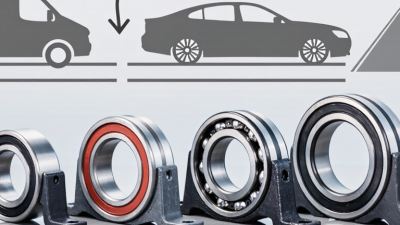
What Are the Top Center Support Bearing Types in 2026?
Center Support Bearing selection in 2026 is not just a parts-counter decision. It affects vibration, shaft alignment, and how smoothly power reaches the wheels. The Federal Highway Administration’s Highway Statistics 2023 reports roughly 3.26 trillion vehicle-miles traveled in the United States that year. That figure describes road use, not bearing life, but it helps show the repeated operating cycles driveline components may face. Real conditions vary sharply: a delivery van crawling over broken streets places different demands on its support than a sedan cruising on smooth highways.
This guide compares the leading types by construction and mounting approach, including rubber-isolated carrier assemblies and designs using different rolling elements. It also considers practical factors such as shaft speed, operating load, sealing, lubrication, and replacement fit. SKF’s Rolling Bearings Catalogue explains why load, speed, and lubrication matter when selecting bearings; those engineering basics remain useful for center-support applications. Still, a catalogue cannot substitute for checking the vehicle’s exact specifications. Small details matter. A mount that looks correct may have a different offset or rubber stiffness, and that mismatch can bring back vibration. The rankings here should be treated as a comparison framework, not a universal verdict: manufacturers differ, and public data rarely compares every type under identical test conditions. That limitation deserves attention. Choosing well means matching the bearing to the vehicle, duty cycle, and installation—not simply picking the newest design.
Read more »
 By:Evelyn
- November 10, 2026
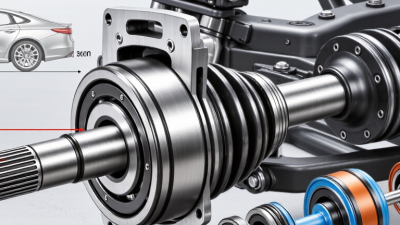
Why Choose the Right Drive Shaft Bearing?
A drive shaft may look simple from beneath a vehicle, but it carries torque while working through vibration, changing loads, and uneven road conditions. The Drive Shaft Bearing helps support the shaft and maintain smooth rotation. When it wears, a driver may notice a low hum, vibration under acceleration, or a clunk during gear changes. Small part. Big consequence. These signs can have several causes, so they should prompt inspection rather than an immediate guess.
Choosing a replacement by size alone is an incomplete approach. Load capacity, operating speed, alignment, lubrication, sealing, and exposure to heat or dirt all affect bearing performance. A bearing that fits the housing may still be unsuitable for the vehicle’s actual conditions. Even a small alignment error can add stress, while a damaged seal may let grit reach the rolling surfaces. That detail is easy to overlook.
A sound choice starts with the vehicle manufacturer’s specifications and a careful assessment of the existing assembly. Check the bearing type, dimensions, mounting arrangement, and any signs of wear on nearby components. Installation matters too: forcing a bearing into place can damage it before the vehicle moves. There is no universal bearing for every shaft. The practical goal is dependable fit and operation, not simply the lowest price or fastest replacement. This guide explains the factors that help make that choice, while recognizing that real-world wear does not always follow a neat checklist.
Read more »
By:Evelyn
- November 10, 2026
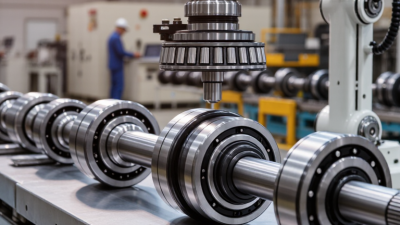
Top 10 Drive Shaft Center Bearing Suppliers Worldwide
A Drive Shaft Center Bearing may be small, but it supports a demanding job: stabilizing the propeller shaft, limiting vibration, and helping maintain smooth power delivery. Supplier selection therefore involves more than comparing catalog prices. Buyers also examine bearing materials, rubber compound durability, sealing, production consistency, and vehicle-specific fit. A failed component can bring unwanted noise and vibration beneath the floor.
The wider vehicle market provides useful context, though it does not directly measure center-bearing demand. OICA reported approximately 93.5 million motor vehicles produced worldwide in 2023, indicating the scale of the manufacturing base these suppliers serve. The IEA’s Global EV Outlook 2024 reported nearly 14 million electric cars sold in 2023. That shift matters: electrification changes driveline layouts, while many conventional and hybrid vehicles still use propeller shafts. The numbers are informative, but they are not the whole story. Vehicle output is not a bearing forecast.
This guide to the Top 10 Drive Shaft Center Bearing Suppliers Worldwide compares companies through practical factors: product range, manufacturing footprint, quality systems, engineering support, and coverage of original-equipment and replacement markets. Public supplier information can be uneven, and rankings should not be mistaken for audited market shares. A detailed review of application data, testing capability, and traceability is still necessary. Small parts deserve careful scrutiny.
Read more »
By:Evelyn
- November 10, 2026
