0%

A Drive Shaft Center Bearing may be small, but it supports a demanding job: stabilizing the propeller shaft, limiting vibration, and helping maintain smooth power delivery. Supplier selection therefore involves more than comparing catalog prices. Buyers also examine bearing materials, rubber compound durability, sealing, production consistency, and vehicle-specific fit. A failed component can bring unwanted noise and vibration beneath the floor.

The wider vehicle market provides useful context, though it does not directly measure center-bearing demand. OICA reported approximately 93.5 million motor vehicles produced worldwide in 2023, indicating the scale of the manufacturing base these suppliers serve. The IEA’s Global EV Outlook 2024 reported nearly 14 million electric cars sold in 2023. That shift matters: electrification changes driveline layouts, while many conventional and hybrid vehicles still use propeller shafts. The numbers are informative, but they are not the whole story. Vehicle output is not a bearing forecast.

This guide to the Top 10 Drive Shaft Center Bearing Suppliers Worldwide compares companies through practical factors: product range, manufacturing footprint, quality systems, engineering support, and coverage of original-equipment and replacement markets. Public supplier information can be uneven, and rankings should not be mistaken for audited market shares. A detailed review of application data, testing capability, and traceability is still necessary. Small parts deserve careful scrutiny.
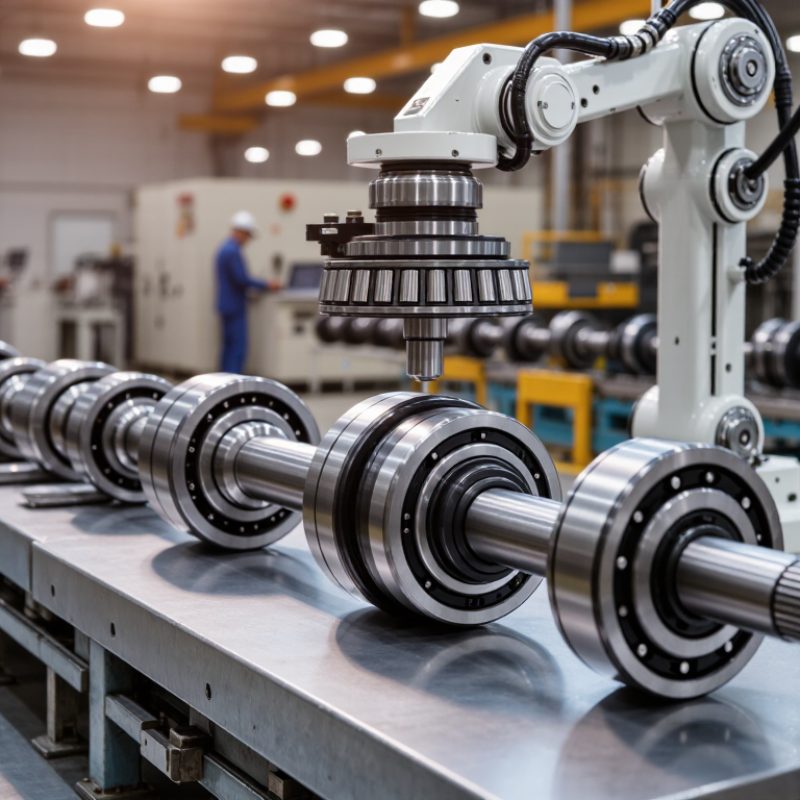
Top 10 Drive Shaft Center Bearing Suppliers Worldwide

Define the Center Bearing’s Role in a Two-Piece Driveshaft System

In a two-piece driveshaft, the center bearing supports the shaft where its sections meet. It carries radial load and helps limit sag across a long span. Its rubber-mounted housing also cushions vibration before it reaches the vehicle floor. Small part. Big job. When the bearing wears, a driver may feel a low-speed shudder, hear a hum, or notice a thump during acceleration. These clues are useful, but they do not prove the bearing is the only cause.

The support position matters. It affects shaft alignment, joint angles, and how vibration travels through the chassis. ISO 281:2007 defines basic bearing rating life, L10, as the life that 90% of a group of identical bearings can reach under stated conditions. That is a useful reference, not a promise of service life in a vehicle. Contamination, installation preload, heat, and changing loads can all shorten actual life. In practice, inspect the rubber isolator and mounting bracket alongside the bearing; a sound bearing in a damaged support can still behave poorly.

Tips: Check for cracked rubber, loose fasteners, and measurable shaft movement before replacing parts. Compare vibration under similar speed and load conditions. A road test alone can mislead, so record the symptom and inspect the full driveline. The diagnosis is not always neat. ISO 281 does not model every real-world shock or installation error.

Set Supplier Criteria: Applications, Certifications, Capacity, and Global Reach

For a drive shaft center bearing, match the supplier’s experience to the application: passenger cars, light commercial vehicles, or heavy-duty trucks. Check operating speed, torque, temperature range, and exposure to water or road grit. Ask how the bearing and rubber support are tested for vibration and noise. Fit matters. A catalog match alone may miss a real-world load condition.

Verify that IATF 16949 certification covers the actual production site, and review audit records, lot traceability, and production approval samples. Capacity should include measurable output, backup tooling, and a plan for demand changes. OICA’s 2023 production statistics report about 93.5 million motor vehicles built worldwide. That figure shows the scale of the automotive supply chain, not center-bearing demand; suppliers should provide application-specific capacity evidence. Global reach also means practical support: regional inventory, engineering response, and clear shipping lead times.

Tips: Request test data for your shaft configuration, not just a standard brochure. Confirm who handles urgent quality issues across time zones. Small gaps matter. I would still compare promised capacity with recent delivery records; stated capacity can look better on paper.

Profile 10 Worldwide Drive Shaft Center Bearing Suppliers and Their Strengths

Worldwide drive shaft center bearing suppliers differ more by capability than by catalog size. Ten useful profiles include OE replacement makers with broad fitment data; bearing specialists focused on rubber and metal durability; drivetrain integrators supplying matched assemblies; heavy-duty suppliers serving high-load trucks; commercial-vehicle specialists with fleet coverage; off-highway makers designing for dust and vibration; regional distributors offering nearby stock; custom-engineering shops adapting brackets; high-volume factories supporting stable production; and service-focused suppliers handling smaller orders. These are supplier types, not a ranked list.

Their strengths become clearer in real operating details. A well-designed bearing should control shaft movement, limit vibration, and tolerate heat near the exhaust. Look for stated load ratings, material details, dimensional drawings, and testing conditions. Ask how suppliers validate rubber hardness and bonding, especially when vehicles face frequent rough-road use. A polished catalog is not proof of fit. Some product data is incomplete, and that deserves a follow-up question.

Tips: Confirm shaft diameter, bracket spacing, and bearing position before ordering. Compare warranty terms and sample inspection records. If specifications conflict, pause and verify them. That small delay can prevent noise, premature wear, and a costly repeat repair.

Compare Fitment Against ISO 15 Bearing Boundary Dimensions

When comparing drive shaft center bearing suppliers, use ISO 15 boundary dimensions as a starting point, not a complete fitment guarantee. Check the bearing bore, outside diameter, and width against the required dimensions. Record units and tolerances; a millimeter-level mismatch can prevent proper seating. Measure the bearing, not just the carton.

A supplier’s data should also distinguish the rolling bearing from the full support assembly. ISO 15 does not specify the rubber cushion, mounting bracket, bolt spacing, or shaft alignment. Ask for a dimensioned drawing and confirm these interfaces against the vehicle’s original part or engineering specification. Check load, speed, and operating-temperature information too. A nominal size match is not enough.

During inspection, use clean, calibrated measuring tools and compare the part at several points. Look for damage, uneven edges, or a bearing that feels rough when turned by hand. Small details matter. Catalog data can be incomplete, and I would treat any unexplained dimension as a fitment risk rather than assume it is harmless. A careful comparison makes supplier claims easier to evaluate, but installation conditions still deserve a final check.

Evaluate Ball-Bearing Life Using ISO 281: L₁₀ = (C/P)³ Million Revolutions

When comparing drive shaft center bearing suppliers, use ISO 281 as a starting point for checking ball-bearing life. Its basic rating life is L₁₀ = (C/P)³ million revolutions. C is the bearing’s basic dynamic load rating; P is the equivalent dynamic load. L₁₀ represents a statistical estimate: 90% of a sufficiently large group should reach that life under standard conditions. It is not a service-life guarantee. For example, if C is 25 kN and P is 5 kN, the estimate is 125 million revolutions. At 1,500 rpm, that is about 1,389 operating hours, assuming continuous speed and load.

Useful, but incomplete. In a vehicle, shaft angle, bearing alignment, vibration, shock loads, grease condition, and road contamination can all affect performance. Ask suppliers how they determine P and what test conditions support their ratings. Check whether their specified bearing fits the actual shaft speed and installation geometry. A clean calculation may still miss a harsh operating cycle. I would treat the estimate as a comparison tool, then verify it through representative bench or vehicle testing. Small differences in installation can matter. That part is easy to overlook.

FAQS

What does a center bearing do in a two-piece driveshaft?

It supports the shaft where its sections meet, carries radial load, and helps limit sag. Its rubber housing also cushions vibration.

What symptoms can indicate a worn center bearing?

A low-speed shudder, humming sound, or acceleration thump may occur. These clues are useful, but they do not confirm the bearing is the only cause.

What should be inspected before replacing the bearing?

Check for cracked rubber, loose fasteners, and measurable shaft movement. Inspect the mounting bracket too. A damaged support can cause trouble.

Does a road test provide a reliable diagnosis?

Not by itself. Compare vibration at similar speeds and loads, record the symptoms, and inspect the full driveline. Diagnosis can be messy.

What does an L10 bearing-life rating tell you?

It describes a basic rating life that 90% of identical bearings may reach under stated conditions. It is not a vehicle service-life promise.

What details should a supplier verify for your application?

Share the shaft configuration, operating speed, torque, temperature range, and exposure to water or road grit. A catalog match may miss real loads.

Which production and quality records should buyers request?

Verify certification for the actual production site. Review audit records, lot traceability, production approval samples, and test data for your shaft configuration.

How can you assess a supplier’s capacity and product fit?

Ask for measurable output, backup tooling, recent delivery records, drawings, load ratings, and sample inspection records. Check shaft diameter and bracket spacing. Paper promises can look better than reality.

Conclusion

A Drive Shaft Center Bearing supports the intermediate section of a two-piece driveshaft, helping maintain alignment, reduce vibration, and manage loads as the shaft rotates. Choosing a suitable supplier starts with matching the bearing to its intended vehicle or industrial application. Buyers should also assess relevant certifications, production capacity, quality controls, customization options, delivery reliability, and ability to serve different regions.

A worldwide supplier comparison can highlight differences in engineering support, product range, manufacturing scale, and application experience without relying on brand names alone. Before selecting a part, verify its fitment against the applicable ISO 15 boundary dimensions, including bore, outside diameter, and width. For ball-bearing options, ISO 281 provides a basic life estimate: L₁₀ = (C/P)³ million revolutions, where C is the dynamic load rating and P is the equivalent dynamic load. These checks help narrow the options, but operating conditions and installation requirements should also guide the final choice.

Evelyn

Evelyn

Evelyn is a professional marketing specialist who combines a strong understanding of the company’s products with a clear, customer-focused approach to communication. She regularly contributes expert articles to the company website, helping readers understand product features, compare practical......