0%

Center Support Bearing selection in 2026 is not just a parts-counter decision. It affects vibration, shaft alignment, and how smoothly power reaches the wheels. The Federal Highway Administration’s Highway Statistics 2023 reports roughly 3.26 trillion vehicle-miles traveled in the United States that year. That figure describes road use, not bearing life, but it helps show the repeated operating cycles driveline components may face. Real conditions vary sharply: a delivery van crawling over broken streets places different demands on its support than a sedan cruising on smooth highways.

This guide compares the leading types by construction and mounting approach, including rubber-isolated carrier assemblies and designs using different rolling elements. It also considers practical factors such as shaft speed, operating load, sealing, lubrication, and replacement fit. SKF’s Rolling Bearings Catalogue explains why load, speed, and lubrication matter when selecting bearings; those engineering basics remain useful for center-support applications. Still, a catalogue cannot substitute for checking the vehicle’s exact specifications. Small details matter. A mount that looks correct may have a different offset or rubber stiffness, and that mismatch can bring back vibration. The rankings here should be treated as a comparison framework, not a universal verdict: manufacturers differ, and public data rarely compares every type under identical test conditions. That limitation deserves attention. Choosing well means matching the bearing to the vehicle, duty cycle, and installation—not simply picking the newest design.
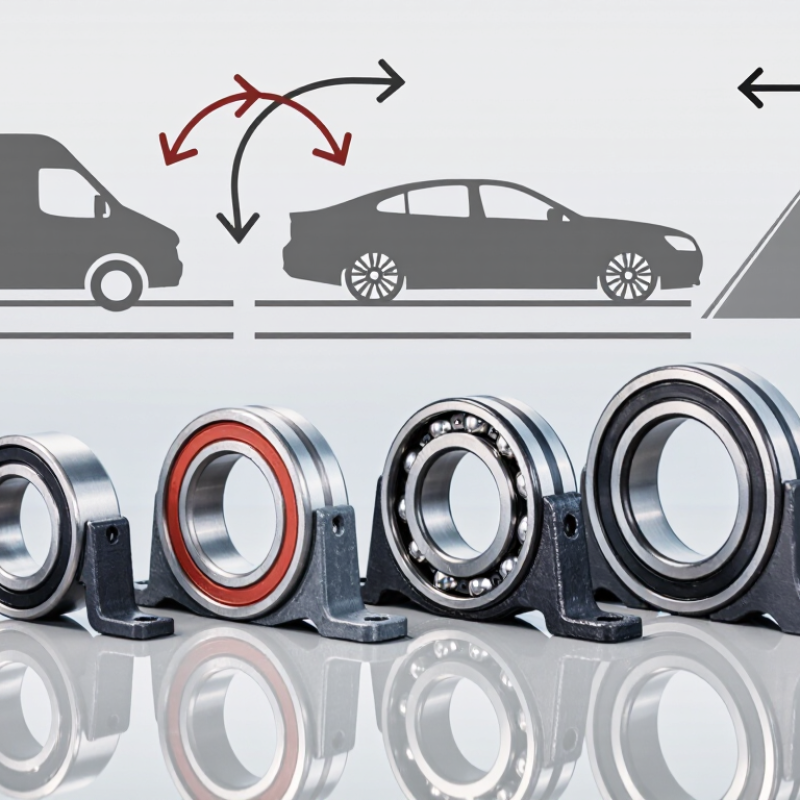
What Are the Top Center Support Bearing Types in 2026?

What Center Support Bearings Do in Driveline Systems

What Are the Top Center Support Bearing Types in 2026?

What Center Support Bearings Do in Driveline Systems

In a multi-piece driveline, the center support bearing carries the middle section of the propeller shaft. Its bracket attaches to the vehicle frame, while a rubber cushion helps isolate vibration. This support limits shaft movement as torque passes from the transmission to the differential. It also helps keep shaft sections aligned as the vehicle accelerates, corners, and crosses uneven pavement.

Small component, demanding job.

The International Energy Agency’s Global EV Outlook 2025 reports that electric car sales exceeded 17 million worldwide in 2024, topping 20% of new-car sales. That shift changes driveline layouts, but many vehicles still use rotating shafts and support points. OICA reported about 93.5 million motor vehicles produced globally in 2023; this is not a bearing-demand estimate, but it shows the scale of the vehicle fleet. During inspection, technicians can check for torn rubber, looseness, rust, or grease loss. A worn support may cause a low hum, vibration, or a thump during acceleration. Yet symptoms can overlap with other driveline faults. A quiet road test alone is not enough; shaft alignment and surrounding joints deserve attention too.

The Main Center Support Bearing Types Available in 2026

Center support bearings in 2026 are generally classified by their bearing design and the way their mount isolates vibration. The standard type uses a steel bearing inside a rubber-cushioned bracket. It supports the driveshaft near its midpoint while allowing slight movement as the vehicle travels over uneven roads. A sealed, pre-lubricated version needs little routine attention. Check for torn rubber, rough rotation, or a low humming noise.

Some applications use serviceable bearing assemblies, where the bearing can be replaced separately from the support. Availability depends on the vehicle and shaft design. Single-row and double-row bearings are other common distinctions; the appropriate arrangement depends on load, speed, and original equipment specifications. The distinction can be confusing. A matching appearance does not confirm a correct fit.

Support mounts also vary in stiffness. Standard rubber mounts help limit vibration reaching the cabin, while reinforced or firmer mounts may better control shaft movement under heavier loads. Firmer is not always better. Excessive stiffness can transmit more vibration through the floor. Before choosing a type, compare shaft diameter, bracket spacing, bearing dimensions, and mounting position. Installation alignment matters, too; a suitable bearing can still produce noise if the driveshaft is not centered correctly.

How Bearing Designs Differ in Materials and Construction

What Are the Top Center Support Bearing Types in 2026? How Bearing Designs Differ in Materials and Construction

Center support bearings commonly use a steel bearing assembly held within a rubber isolator and metal bracket. The bearing’s hardened steel races and rolling elements carry the rotating shaft. The rubber cushion helps absorb vibration and accommodates slight movement. Some designs use reinforced elastomer or different bracket metals to suit heat, load, and mounting conditions. The U.S. Department of Energy’s 2014 Improving Motor and Drive System Performance sourcebook reports that motor-driven systems account for about 68% of electricity use in U.S. manufacturing. That figure covers entire systems, not bearings alone, but it shows why efficient rotating equipment deserves careful attention.

Construction changes how a support behaves. A firmer rubber compound can limit shaft movement, while a softer one may isolate more vibration but allow greater deflection. Sealed bearing units help keep dust and moisture away from rolling surfaces; however, seal design and operating conditions still matter. A heavy bracket may feel reassuring, yet poor alignment can shorten service life. Small differences matter.

Tips: Check the shaft diameter, bracket spacing, and operating environment before selecting a replacement. Inspect the rubber for cracks and separation, not just the bearing for noise. One practical caution: a quiet test at idle does not guarantee stable support under load.

What Are the Top Center Support Bearing Types in 2026?

Common center support bearing designs differ in their bearing, isolator, and bracket construction. This chart compares the approximate density of materials commonly used in these components.

Steel is commonly used for bearing races and brackets, while rubber or polyurethane cushions isolate vibration. Aluminum may be used for some brackets. Values are approximate; actual density varies by grade and compound. Material density alone does not indicate bearing performance.

Where Each Center Support Bearing Type Is Used

What Are the Top Center Support Bearing Types in 2026?
Where Each Center Support Bearing Type Is Used

A standard rubber-isolated center support bearing suits many two-piece driveshafts in rear-wheel-drive cars, vans, and light trucks. Its rubber cushion absorbs some vibration while holding the shaft near its intended position. It is commonly used for everyday road driving. Fit matters. A support with the wrong height or spacing can leave the driveshaft misaligned, even if its bearing diameter matches.

Reinforced rubber supports are often selected for heavier vehicles, frequent loads, or drivetrains exposed to stronger torque. The firmer cushion can help control movement, but it may transmit more vibration into the cabin. It is not automatically a better choice for every vehicle. Check the vehicle’s specifications and the condition of the surrounding shaft and mounts before choosing one.

Some applications use sealed bearing units, which limit exposure to dirt and moisture and generally require no routine lubrication. They are common where access is difficult or maintenance needs to stay simple. Serviceable designs, where available, may suit equipment that receives scheduled inspection. Labels can be inconsistent between suppliers, so compare dimensions, mounting style, and bearing specifications. A small difference in bracket offset can matter. The correct type depends on the vehicle, load, and original driveline layout—not just the model year.

How to Choose a Center Support Bearing for Your Vehicle

Choosing a center support bearing starts with the driveshaft, not a catalog photo. Confirm the vehicle’s year, engine, drivetrain, wheelbase, and shaft configuration. Most choices are standard rubber-isolated assemblies or reinforced designs, but the correct fit depends on the vehicle’s specifications. A two-piece shaft may need a particular bracket height or offset. Measure the old unit’s inner diameter and mounting-hole spacing, then compare them with service information. Small differences matter.

Consider how the vehicle is used. Daily commuting usually calls for a correctly matched rubber isolator that controls vibration without adding excess cabin noise. Towing, rough roads, and heavy loads can place greater stress on the bearing and its support. Check for torn rubber, rust, looseness, heat damage, or a rough feel when rotating the bearing by hand. Don’t guess.

Fitment is only part of the decision. Confirm the replacement matches the original dimensions, support height, and shaft alignment. A stiffer mount may feel harsher inside the cabin. If the driveshaft has play, clunks, or speed-related vibration, inspect its joints and balance too. A new bearing may not fix the real fault. I’d verify specifications against the vehicle’s repair data before ordering, even when the old part looks obvious.

FAQS

What does a center support bearing do?

It supports the driveshaft near its midpoint. Its rubber cushion helps reduce vibration as the vehicle moves over uneven roads.

What parts are commonly used in its construction?

A typical assembly has a steel bearing, rubber isolator, and metal bracket. The bearing carries the rotating shaft; the rubber absorbs some vibration.

How can I spot a worn support bearing?

Look for torn or separated rubber, rough bearing rotation, or a low humming noise. Check the rubber, too.

What is the difference between sealed and serviceable designs?

Sealed, pre-lubricated units generally need little routine attention. In some assemblies, the bearing can be replaced separately from its support.

Should I choose a single-row or double-row bearing?

The right arrangement depends on load, speed, and the vehicle’s original specifications. Similar appearance alone does not confirm a correct fit.

Are firmer support mounts always better?

No. A firmer mount may limit shaft movement under heavier loads, but it can transmit more vibration through the floor.

What should I measure before selecting a replacement?

Compare shaft diameter, bracket spacing, bearing dimensions, and mounting position. I find these details easy to overlook; they matter.

Can a correctly sized bearing still make noise after installation?

Yes. Poor alignment can cause noise even with a suitable bearing. The driveshaft must be centered correctly, and an idle test may not reveal problems under load.

Conclusion

Center Support Bearing types play an important role in keeping a vehicle’s driveshaft aligned and supported, especially in longer driveline systems. By helping control vibration and movement between sections of the shaft, they contribute to smoother, quieter power transfer. Common designs include standard rubber-isolated supports, heavy-duty versions for greater loads, and specialized configurations suited to different driveline layouts. Their construction may combine a rolling-element bearing with a metal housing and a flexible rubber cushion, while variations in bearing material, seal design, and mount stiffness affect durability and vibration control.

The right Center Support Bearing depends on the vehicle’s design and how it is used. A standard configuration may suit everyday driving, while a reinforced or differently tuned support may be more appropriate for higher loads or demanding conditions. Before choosing, consider fitment, shaft dimensions, mounting points, operating environment, and the level of vibration isolation required. Matching the bearing to the driveline helps support reliable operation and avoids problems caused by an unsuitable design.

Evelyn

Evelyn

Evelyn is a professional marketing specialist who combines a strong understanding of the company’s products with a clear, customer-focused approach to communication. She regularly contributes expert articles to the company website, helping readers understand product features, compare practical......